Written by: Professor Stephen Sohn
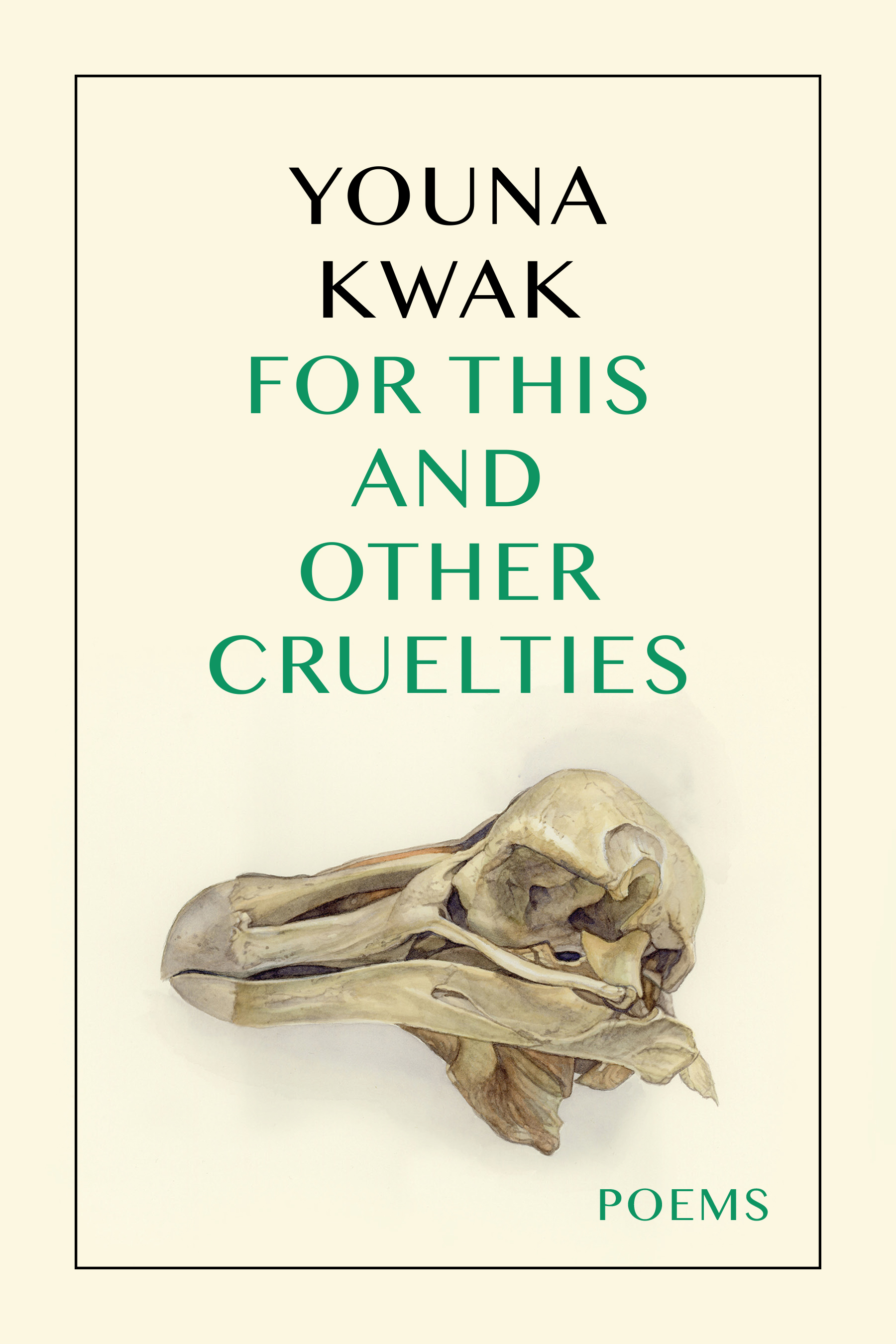
So, I know it’s been a long while since I’ve reviewed a proper poetry collection, and I figured it would thus be a good time to cover Youna Kwak’s For This and Other Cruelties (University of Iowa Press, 2025) and Don Mee Choi’s Mirror Nation (2024). Kwak, Choi, and I unofficially call ourselves a team, formed sometime around 2019, and then solidified the editing project that Choi would later convene for The Chicago Review. For that later project, Choi enlisted Kwak and myself to analyze some of the Korean poems and poets that appeared in translation. For more on that dossier, go here:
https://www.chicagoreview.org/issues/6404-6501-contemporary-korean-poetry/
Since then, we’ve done our best to keep in touch, even as we’ve scattered in different global and national directions. One of the supreme ways that we find common footing is in our creative and scholarly endeavors, and such is the case with these two brilliant collections.
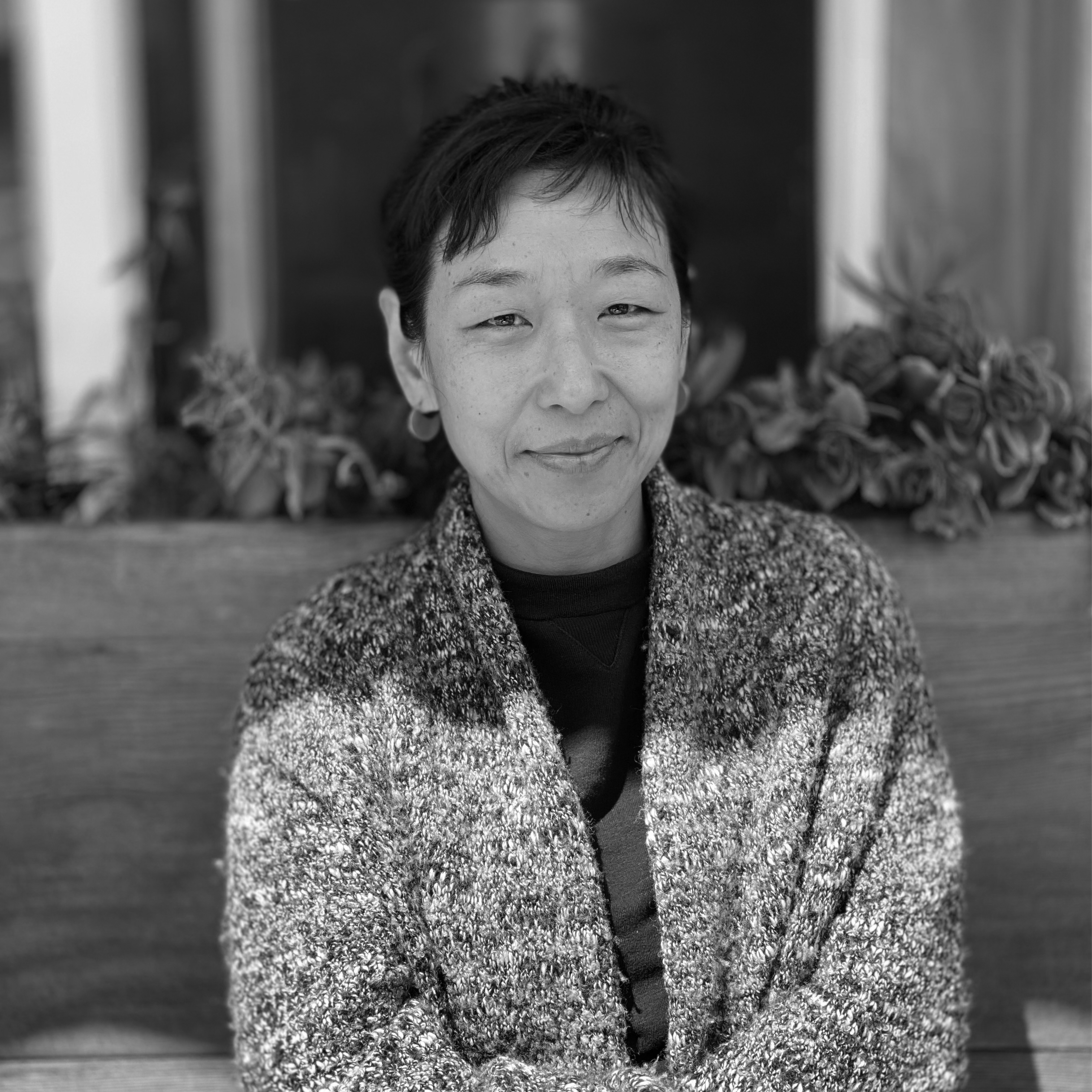
Kwak’s For This and Other Cruelties is her second collection, after sur vie (Fathom Books, 2000). The marketing description over at the website provides us with this information: “The shadow of mothering has never been given a richer, fuller, more debased vision than in Youna Kwak’s For This and Other Cruelties. Kwak casts a cold eye on the splendid and cruel intransigence of maternal paradoxes in all their impossible double binds, monstrous pleasures, and profane mystifications. Shifting between lyric and prose poems, this collection throws slanted light on the ineffability of our deepest attachments, envisioning a world where mother is ‘a creature whose only enemy could be human’. Kwak brings us face to face with the irreconcilable facts of being mother, mothered, and alive.” Kwak also has an all-star list of blurbers. One is, not surprisingly, Don Mee Choi, who writes, “To be mother or not to be mother is what I kept questioning as I read through Youna Kwak’s stunning second poetry collection—how she muddles as well as mothers the seemingly inconsequential question with her fabulist logic and language. Look carefully, and Kwak’s ‘book of the death of the mother’ grows from the messed-up, bloody bed of race, class, gender, and nation. Kwak’s ‘mother’ is not unlike Kim Hyesoon’s ‘mommy’ in that they perpetually mutate and survive, tragically or not, under the same moon, the same shredded tongue, the same global warfare.” The other is Brandon Shimoda, who is the author of many poetry collections and creative nonfictional publications I very much admire: “The first time I saw Youna Kwak read, she levitated. It must’ve been the force of poetry, the intensity of its expression, lifting her off the floor. Now, a lifetime later, I can see the nature of her gravity more clearly. For This and Other Cruelties casts diamond lights (or nettled shadows) on the poet’s (daughter’s, descendant’s) attempt to disburden herself of the weight of inheritance, and on the casualties, configured here as cruelties, of achieving it. Kwak’s heartbreaking grammar of relations and her antigravity of survival overwhelm me with what I, too, must do to fulfill my familial and poetic obligations.” These are really incredible blurbs in terms of really setting up the collection itself. The collection does have an arc. There are four separate sections, with the first focusing on conceptions of motherhood. The early poems are imbued with a kind of anthropological and archaeological-type character. I especially liked the opening of the poem called “Dodo mother,” which conveys the challenges of caregiving, especially in the context of predation. The dodo bird, as we all know, is a creature that eventually goes extinct, so the poem plays with the jeopardies that face any being that dares to create life. As the collection moves forward, the lyrics get increasingly personal, but I did want to stop to discuss one of the poems that shows what I really appreciate about Kwak: there is a kind of dark humor to this collection because it’s very much centered in the contemporary moment. One of the best examples of this dark humor occurs in “The You You Do or Don’t Resemble.” The last major section of this poem offers us these choice lines: “I am more like Proust than I am like Simone Choi, who also watched the towers fall in real time from a street corner in lower Manhattan, who also became eligible to vote during Clinton/Bush Senior. It’s so terrifying what might happen, a sophomore said to me on the eve of the election as we studied together for a European Women’s history exam on the Quad. As it turns out, I didn’t have a clue what terrifying could mean and neither did she.” This particular excerpt I just appreciate so much because of the ways that it really addresses not only a specific historical period but also our contemporary moment, where we face this clear move to an autocratic governmental system. The profanity that Choi brings up is the comparison that we are held to when considering 9/11 alongside what is occurring right now: the assault on free speech, general warfare on our own citizens, as well as the assault on issues related to diversity. As the collection moves further forward, what you really see is they get more concrete and more personal. The poem, “I like I don’t like,” starts to shift us to the point where the lyrics speaker is really moving into something more of a confessional mode: “I want to know whether I am like my mother. I have to ask the questions while she’s here. Once dead, she will drift into difference, my aliveness cause for an irreparable rift, an epistemological obstacle heading me briskly off the meeting point of our alikeness. As long as she is alive, we are both survivors, and this commonality superglues us together. I survive being her daughter, and she survives being my mother, and together we survive the hostile glances and reprobation of everyone around who finds our ways of being mothered and mothering incomprehensible, pointless, and pigheaded.” As Kwak’s lyric speaker shows, there’s this reckoning she is having with conceptions of motherhood and her own mother in general; where this collection ultimately moves to is a kind of excavation of personal history on this level; it has a really strong archival impulse that I really love and which I’ve seen other poets engage in. The really brilliant final section reminds me of the juxtaposition between the concrete and the abstract that is reminiscent of EJ Koh’s A Lesser Love. A couple of key lines here from “Grandfather:” “During the War went into hiding. Disappeared. Didn’t see him for years. Couldn’t wait for him to come home, we did nothing but wait, cannot wait was our vocation. Waited by vocation then we waited no longer. Then the novel apprenticeship, in the as-if he were-not. He is not was our vocation, his not returning our career. The tools for this task were mortar and pestle, yearning fragile, bark of laughter, thin shrug shrubbery. Sling these tools about your diminished waist at the ready. Years pass. War not finished but anyway Truce. One day he appeared . . . . disheveled and happy, large brown suitcase filled with money. Where had he gone, where had he been, what had he done, whose suitcase, whose money, whose children, unholster the hands, for slender strokes and hard slaps. Within months he spent it all. Gambling.” This poem is really amazing to me for what it’s offering in terms of how Kwak is really engaging the lyrics speaker’s project of working through personal history, showing how survivorship also means speaking to these complicated disappearances and reappearances in our past, and this element is where I think the collection really takes off. It really brings together the more philosophical viewpoints and anthropological viewpoints that open the collection and grounds it in this complicated reality of loss, erasure, memory, trauma, intergenerational inheritance all of these really profound and challenging things that we grapple with, especially as we get older. Of course, I can’t help but think that Kwak is also using this poem as an opportunity to explore the ruptures and the fragmentations that emerge out of war. Though it is never detailed, the references seem to suggest that Kwak refers to the Korean War, especially with respect to the “Truce” that is named in the poem. There is also a level of clever wordplay and syntactical style that consistently characterizes Kwak’s work, which is not surprising, given that she has facility in multiple languages.
In this space of ambivalent motherhood, aging, and the desire to find ways to confront our obscured pasts, Kwak’s For This and Other Cruelties astonishes in its metaphysical insights and skillfully crafted lyrics.
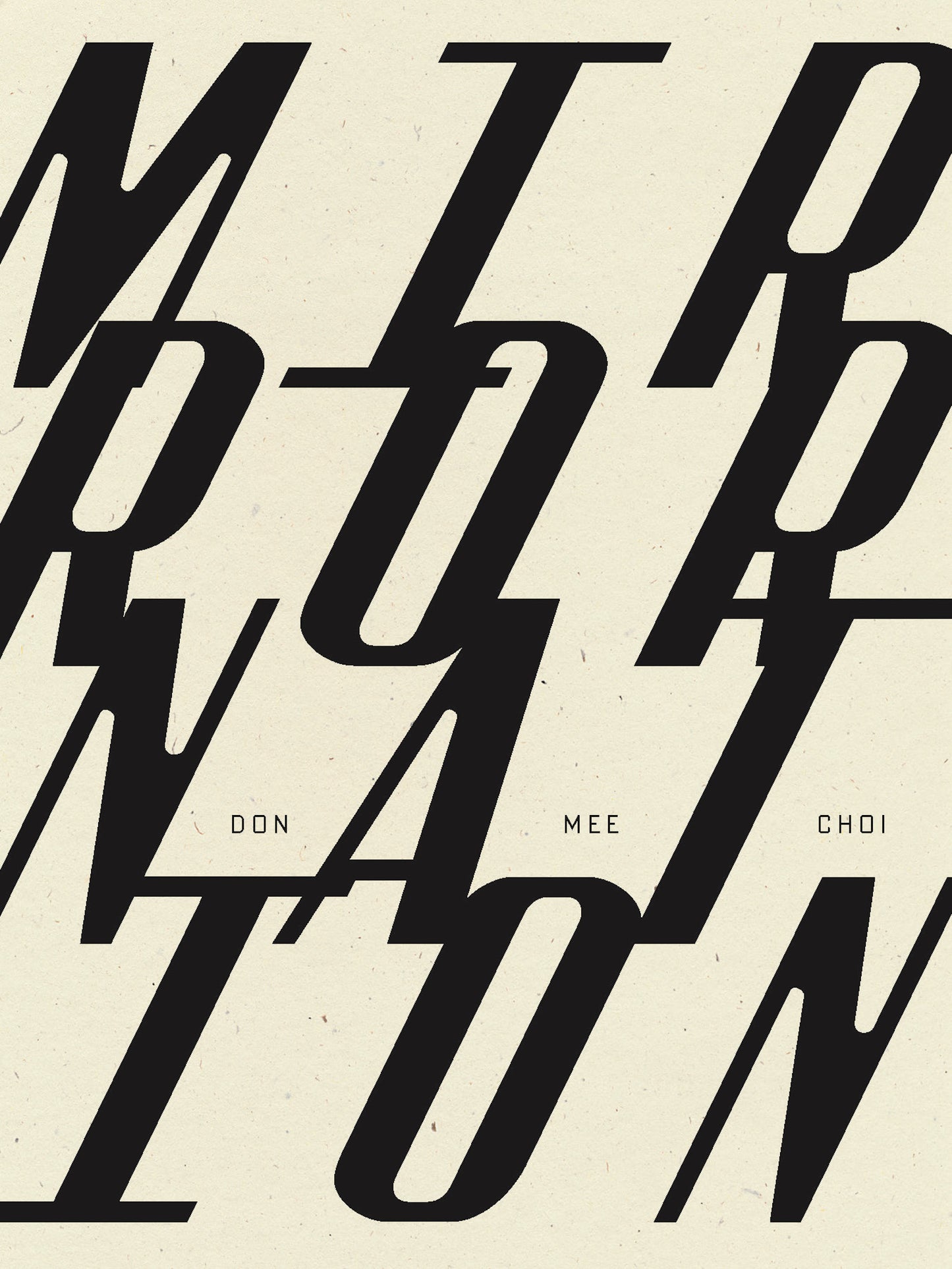
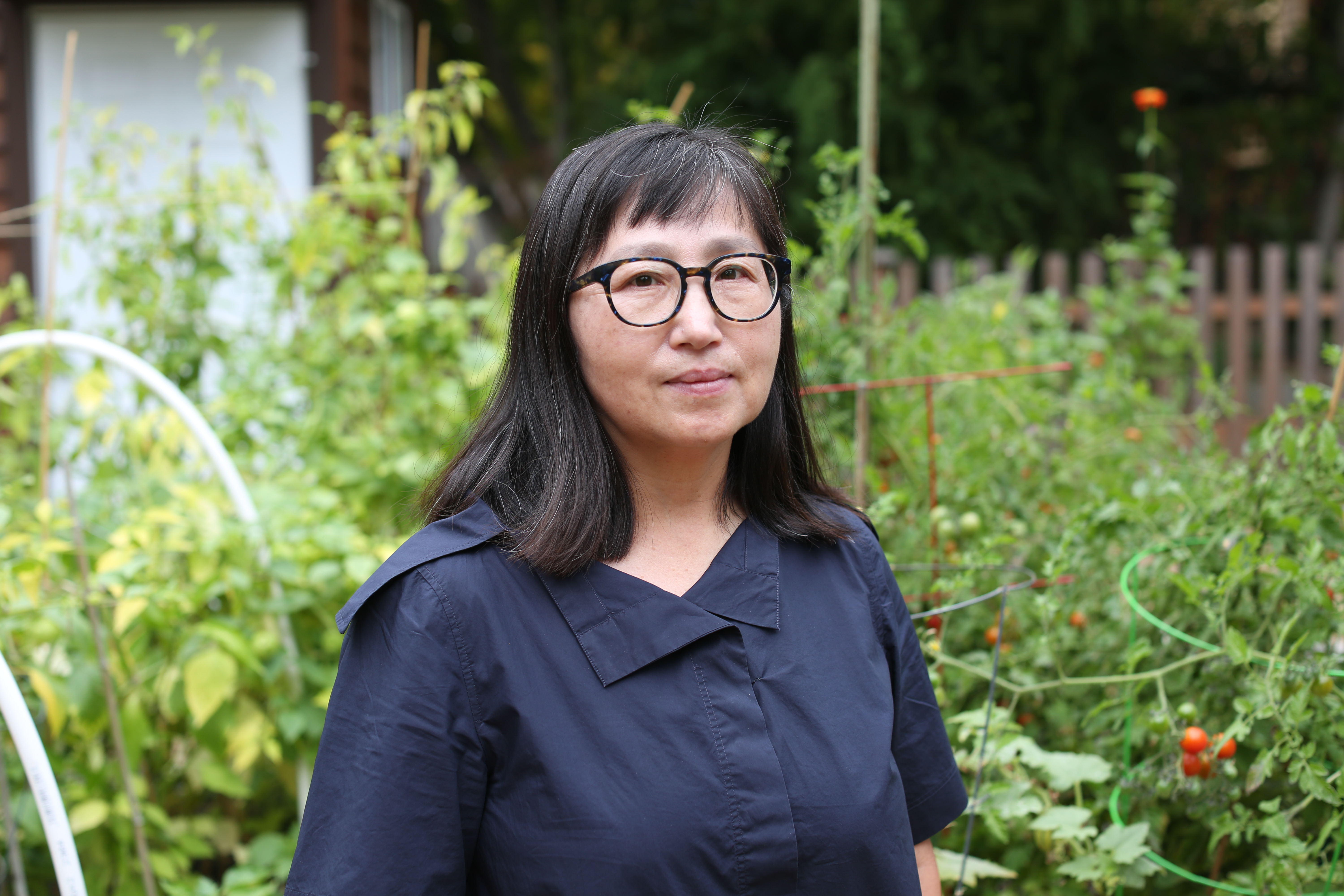
Mirror Nation I actually read quite a while ago, but I didn’t manage to get down my thoughts until recently. While Kwak and Choi obviously have distinctive poetic styles, they both pack deep punches. The official marketing description for Choi’s work is pithy, but provides us with key social and historical contexts: “Elegiac and haunting, Mirror Nation by Don Mee Choi completes the KOR-US trilogy, along with Hardly War and the National Book Award–winning DMZ Colony. Much like Proust's madeleine, a spinning Mercedes Benz ring outside Choi's Berlin window prompts a memory of her father on the Glienicker Bridge between Berlin and Potsdam, which in turn becomes catalyst for delving into the violent colonial and neocolonial contemporary history of South Korea, with particular attention to the horrors of the Gwangju Uprising of May 1980. Here, photographs, news footage, and cultural artifacts commingle with a poetry of grief that is both personal and collective. Inspired by W. G. Sebald and Walter Benjamin as well as Choi’s DAAD Artists residency in Berlin, Mirror Nation is a sorrowful reflection on the ways in which a place can hold a ‘magnetic field of memory,’ proving that history doesn’t merely repeat itself; history is ever present, chiming the hours in a chorus against empire.” If I am not mistaken, Mirror Nation is actually part of a trilogy that Choi has produced, which began with Hardly War and continued with DMZ Colony. Part and parcel of Choi’s poetic charge is the crucial intertwinement of art and politics, documentation and lyricism, creativity and archival recovery, multimodal representation and collage. These aspects continually and incessantly characterize Choi’s fearless work. What struck me upon the initial reading of Mirror Nation is how little we sometimes understand about the Gwangju Uprising of 1980 and how harrowing that time was. I haven’t read too many Asian American literary texts that cover this era; the other one that burnishes brightly is Cathy Park Hong’s Dance Dance Revolution, but Choi’s multimedia approach is of course all her own and very distinct from Hong’s speculative futuristic take on that historical event and period. Because Choi’s father was a photojournalist, he often traveled to places and put himself in situations that were incredibly dangerous, and such was also the case with the Uprising. For anyone documenting that event and the various atrocities that occurred, the archival material that one was possessing came with so much peril. Strewn through this collection then is this sense of fragility and potential harm. If the grounding point of Kwak’s collection is motherhood, then I suppose that Choi’s work provides an analogue on its primary focus on Choi’s partial recovery of her father’s work. And thus, we’re following his career and the different things that he has seen and documented or has not been able to fully document because of different censorship challenges that Choi’s father faced. While the Gwangju sections are certainly the most harrowing, it is clear that Choi’s father is pretty much constantly in danger wherever he is, since he’s moving around all the time. His work also contributes to a level of instability in the family‘s life. His wife and children don’t get to see him all the time. At one point, the father ends up moving them to Hong Kong so that they can be on more stable ground, and that move ends up being something that is in itself a little traumatic because the family must again. As it states on page 13: “Fatigued by endless assignment to war zones and by watching the plight of refugees, my father asked to be relocated. In 1983, we moved from Hong Kong to Frankfurt. My mother collapsed from grief. The grief of departing, once again.” As Choi’s lines reveal, there’s this question of constant and perpetual motion that the family is faced with. Of course, if you read her prior works, you know that Choi embeds many photographs, includes wordplay, equations, scans of notes and scribbles that really make this publication so archivally interesting and really rich in terms of thinking about multimodal form. As with her previous works, the collection is really anchored by these prose poetic blocks, which really increase in their urgency as the collection moves forward. Let’s shift towards the end: you really get this interesting element of how times and places collapse together and why there’s this conception of the “mirror nation.” There is a poem titled Miami 18.5.1980 which I assume is May 18th, 1980, that states “The news of the Gwangju massacre and rebellion was covered up by the military government during and after, for seven years, by arresting and torturing thousands,” and then it moves forward, “Hence it was only sensible that on May 23, 1980, Seoul Shinmun reported on the ‘Miami riot’ instead, which took place during the same days as the ‘Gwangju riot.’ Empire is everywhere.” While Choi intends the “mirror” of “mirror nation”to imagine something beyond South Korea’s status as a neocolony, this text reminds us of the difficulties of charting a new path. Of course, the distortion of the media environment seems especially of the moment given all of the political polarization occurring since the rise of social media and the internet. The only way we can end a review of Mirror Nation is to hope that, in truth, Choi is already considering extending her project into a quartet. After all, empire seems to know no bounds, so we must have poetry at least as a salve, as something that can archive what should not be lost, what violences we should not forget, and what better paths we might forge instead.
The profundity of collections like Kwak’s and Choi’s is that they make things relationally connected. We don’t think of things in isolation and instead come to observe seemingly disparate things like empire and parenthood in all of its catastrophic modes of violence and rupture. They exist in a kind of genealogy that’s connected, and Kwak’s and Choi’s collections clearly work in this genealogical mode, this movement between the personal and the political, the individual and the collective, the more localized and global scales. If Kwak is more interested perhaps in a more standard lyric form (though sometimes giving us prose poetic blocks), then it is Choi who always pushes us with multimodal aesthetic approaches that foreground collage and juxtaposition. Whatever their individual lyric approaches, these collections are the kind that will help us get through these dark times.
Buy the Books Here:
https://uipress.uiowa.edu/books/and-other-cruelties
https://www.wavepoetry.com/products/mirror-nation
Managing Editor
Yosra Thabet
![[community profile]](https://www.dreamwidth.org/img/silk/identity/community.png)
![[personal profile]](https://www.dreamwidth.org/img/silk/identity/user.png) yosrathabet
yosrathabet







 .
. .
. .
. .
. .
. .
. .
. .
. .
. .
.

