![[personal profile]](https://www.dreamwidth.org/img/silk/identity/user.png) samhiggins posting in
samhiggins posting in ![[community profile]](https://www.dreamwidth.org/img/silk/identity/community.png) asianamlitfans
asianamlitfans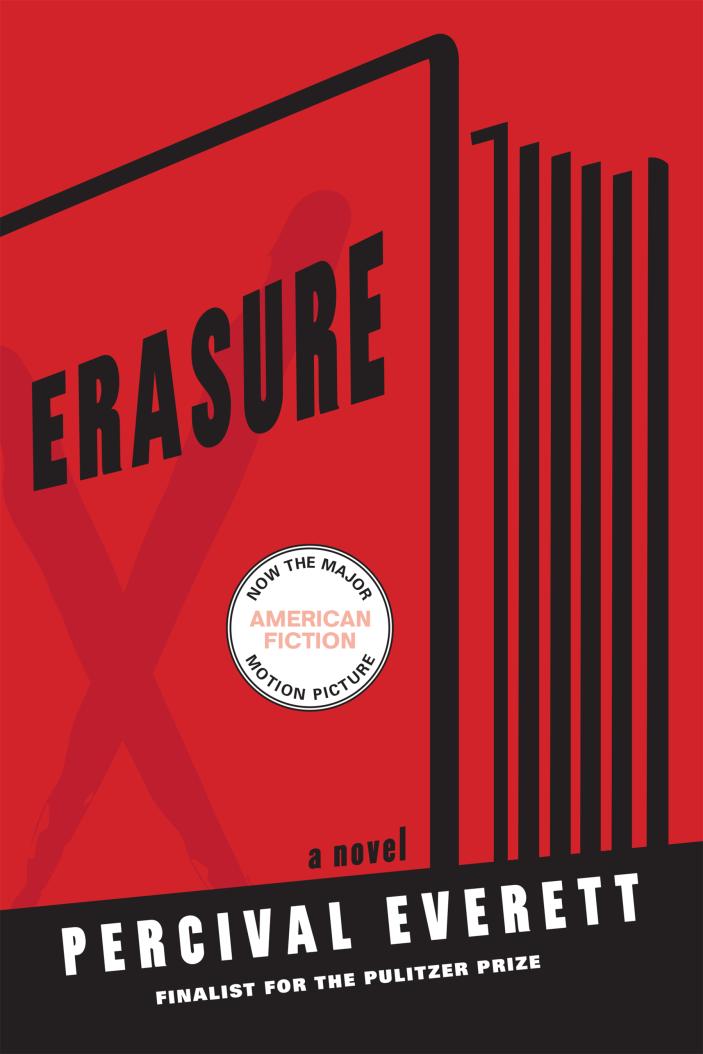
Written by Stephen Hong Sohn
Edited by Sam Higgins
As you know, we have quietly and occasionally expanded who we review, because we can. Asian American literature always exists in an overlap with American literature at large, and so we can turn our attentions occasionally elsewhere. In this case, I return to Percival Everett! I originally read this book in graduate school, in a library copy! It was published by the University Press of New England. If you managed to save a hard copy of that edition, it’s now selling for quite a bit of money on the used markets, partly, I’m sure, because the novel got a boost of interest since it was adapted into a feature film called American Fiction. I read James not long ago, and I recall being really pushed to the limit by Everett’s Erasure, and wanted to return to it. Let’s let the marketing description do some work for us: “Thelonious ‘Monk’ Ellison’s writing career has bottomed out: his latest manuscript has been rejected by seventeen publishers, which stings all the more because his previous novels have been ‘critically acclaimed.’ He seethes on the sidelines of the literary establishment as he watches the meteoric success of We’s Lives in Da Ghetto, a first novel by a woman who once visited ‘some relatives in Harlem for a couple of days.’ Meanwhile, Monk struggles with real family tragedies—his aged mother is fast succumbing to Alzheimer’s, and he still grapples with the reverberations of his father’s suicide seven years before. In his rage and despair, Monk dashes off a novel meant to be an indictment of Juanita Mae Jenkins’s bestseller. He doesn’t intend for My Pafology to be published, let alone taken seriously, but it is—under the pseudonym Stagg R. Leigh—and soon it becomes the Next Big Thing. How Monk deals with the personal and professional fallout galvanizes this audacious, hysterical, and quietly devastating novel.” The thing about the novel is that it does have a really interesting mixture of tonalities. There is a ton of humor, much of it dark, but it is also a very explicit critique of racialized authenticity as it appears in representational terrains. The problem that the novel ultimately comments on is the commodification of racialized identities in narrative form. The analogue on the Asian American end is whether or not we must reckon with a kind of auto-Orientalism in certain novels. Everett asks a similar question from the angle of this novel, looking at how certain tropes can be used by African American writers themselves in order to advance a specific perspective on blackness that can pander to mass audience expectations at the cost of the communities and peoples it represents. The other complicated element of this novel is the question of satire. When Monk writes My Pafology, it is not only out of frustration but also out of a deep sense of confronting readers about the expectations that they have for what blackness should look like in print realms. In this sense, My Pafology’s reception is the quietly devastating component that emerges in the marketing description. Of course, Everett’s novel is not contained to this plot. Indeed, the intricacy of the novel extends to Monk’s relationship to his family as well as his romantic life. In this sense, Everett’s work finds its strongest footing in this flawed yet rounded protagonist, who, I think, still believes in the power of art, and I wonder what truly happens after the last page of this novel has ended.
Buy the Book Here.


