![[personal profile]](https://www.dreamwidth.org/img/silk/identity/user.png) ljiang28 posting in
ljiang28 posting in ![[community profile]](https://www.dreamwidth.org/img/silk/identity/community.png) asianamlitfans
asianamlitfansWritten by Stephen Hong Sohn
Edited by Lina Jiang
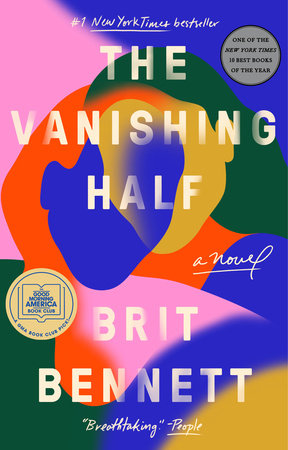
Well, Brit Bennett’s The Vanishing Half (Riverhead Books, 2020) will certainly join the list of books one must read when considering the topic of passing! It boasts gorgeous prose, a multigenerational family plot, as well as great characterization. Let’s let the official marketing description get us off the ground here: “The Vignes twin sisters will always be identical. But after growing up together in a small, southern black community and running away at age sixteen, it's not just the shape of their daily lives that is different as adults, it's everything: their families, their communities, their racial identities. Many years later, one sister lives with her black daughter in the same southern town she once tried to escape. The other secretly passes for white, and her white husband knows nothing of her past. Still, even separated by so many miles and just as many lies, the fates of the twins remain intertwined. What will happen to the next generation, when their own daughters' storylines intersect? Weaving together multiple strands and generations of this family, from the Deep South to California, from the 1950s to the 1990s, Brit Bennett produces a story that is at once a riveting, emotional family story and a brilliant exploration of the American history of passing. Looking well beyond issues of race, The Vanishing Half considers the lasting influence of the past as it shapes a person's decisions, desires, and expectations, and explores some of the multiple reasons and realms in which people sometimes feel pulled to live as something other than their origins.”
So, this passage doesn’t provide us with the specifics of character names. The Vignes twin sisters are Desiree and Stella. When they make off for New Orleans out of the town of Mallard one day, they intend never to return. The problem is that they take very separate paths once in New Orleans. As money runs out, Stella eventually decides to take on a job which requires her to pass for white. Over time, Stella submerges herself within this monoracial identity, which pushes her away from Desiree and into a new world of racial passing. When Desiree feels left behind, she embarks on a new life, entering into an abusive relationship. This unfortunate circumstance pushes her to return to Mallard, where she returns to her childhood home and to the mother that she thought she would never see again. She relies upon this connection to help raise her daughter Jude. As Jude grows up and time passes, Desiree forms a relationship with Early, a sort of bounty hunter and contractor. Early helps establish the fact that Stella has moved into another life as a white individual. Jude eventually moves out to California for school, falls in love with a trans man named Reese; it is Jude who accidentally stumbles upon the fact that her cousin is none other than a woman named Kennedy, and that Kennedy’s mother is Jude’s aunt. This fortuitous turn of events stretches some level of credulity (at least for me), but Bennett’s masterful storytelling sweeps you quickly away, as you become invested in Jude’s and Kennedy’s possible friendship. Bennett’s conclusion I found tremendously unsatisfying—and I will include my spoiler warning here, so look away now unless you want to find out a little bit about what happens—because Jude’s and Kennedy’s connection seems so unexpected, a fitting rapprochement that their mothers could not fully make. Bennett leaves us in a far more understated and perhaps more realistic denouement but given the serendipity of Jude’s initial encounter with Kennedy, I was hoping for lightning to strike one more time. Bennett, already well known for her first novel, is obviously one to watch and to read.
Buy the Book Here
Edited by Lina Jiang
Well, Brit Bennett’s The Vanishing Half (Riverhead Books, 2020) will certainly join the list of books one must read when considering the topic of passing! It boasts gorgeous prose, a multigenerational family plot, as well as great characterization. Let’s let the official marketing description get us off the ground here: “The Vignes twin sisters will always be identical. But after growing up together in a small, southern black community and running away at age sixteen, it's not just the shape of their daily lives that is different as adults, it's everything: their families, their communities, their racial identities. Many years later, one sister lives with her black daughter in the same southern town she once tried to escape. The other secretly passes for white, and her white husband knows nothing of her past. Still, even separated by so many miles and just as many lies, the fates of the twins remain intertwined. What will happen to the next generation, when their own daughters' storylines intersect? Weaving together multiple strands and generations of this family, from the Deep South to California, from the 1950s to the 1990s, Brit Bennett produces a story that is at once a riveting, emotional family story and a brilliant exploration of the American history of passing. Looking well beyond issues of race, The Vanishing Half considers the lasting influence of the past as it shapes a person's decisions, desires, and expectations, and explores some of the multiple reasons and realms in which people sometimes feel pulled to live as something other than their origins.”
So, this passage doesn’t provide us with the specifics of character names. The Vignes twin sisters are Desiree and Stella. When they make off for New Orleans out of the town of Mallard one day, they intend never to return. The problem is that they take very separate paths once in New Orleans. As money runs out, Stella eventually decides to take on a job which requires her to pass for white. Over time, Stella submerges herself within this monoracial identity, which pushes her away from Desiree and into a new world of racial passing. When Desiree feels left behind, she embarks on a new life, entering into an abusive relationship. This unfortunate circumstance pushes her to return to Mallard, where she returns to her childhood home and to the mother that she thought she would never see again. She relies upon this connection to help raise her daughter Jude. As Jude grows up and time passes, Desiree forms a relationship with Early, a sort of bounty hunter and contractor. Early helps establish the fact that Stella has moved into another life as a white individual. Jude eventually moves out to California for school, falls in love with a trans man named Reese; it is Jude who accidentally stumbles upon the fact that her cousin is none other than a woman named Kennedy, and that Kennedy’s mother is Jude’s aunt. This fortuitous turn of events stretches some level of credulity (at least for me), but Bennett’s masterful storytelling sweeps you quickly away, as you become invested in Jude’s and Kennedy’s possible friendship. Bennett’s conclusion I found tremendously unsatisfying—and I will include my spoiler warning here, so look away now unless you want to find out a little bit about what happens—because Jude’s and Kennedy’s connection seems so unexpected, a fitting rapprochement that their mothers could not fully make. Bennett leaves us in a far more understated and perhaps more realistic denouement but given the serendipity of Jude’s initial encounter with Kennedy, I was hoping for lightning to strike one more time. Bennett, already well known for her first novel, is obviously one to watch and to read.
Buy the Book Here


