![[personal profile]](https://www.dreamwidth.org/img/silk/identity/user.png) xiomara posting in
xiomara posting in ![[community profile]](https://www.dreamwidth.org/img/silk/identity/community.png) asianamlitfans
asianamlitfansA Review of Chia-Chia Lin’s The Unpassing (FSG, 2019).
By Stephen Hong Sohn 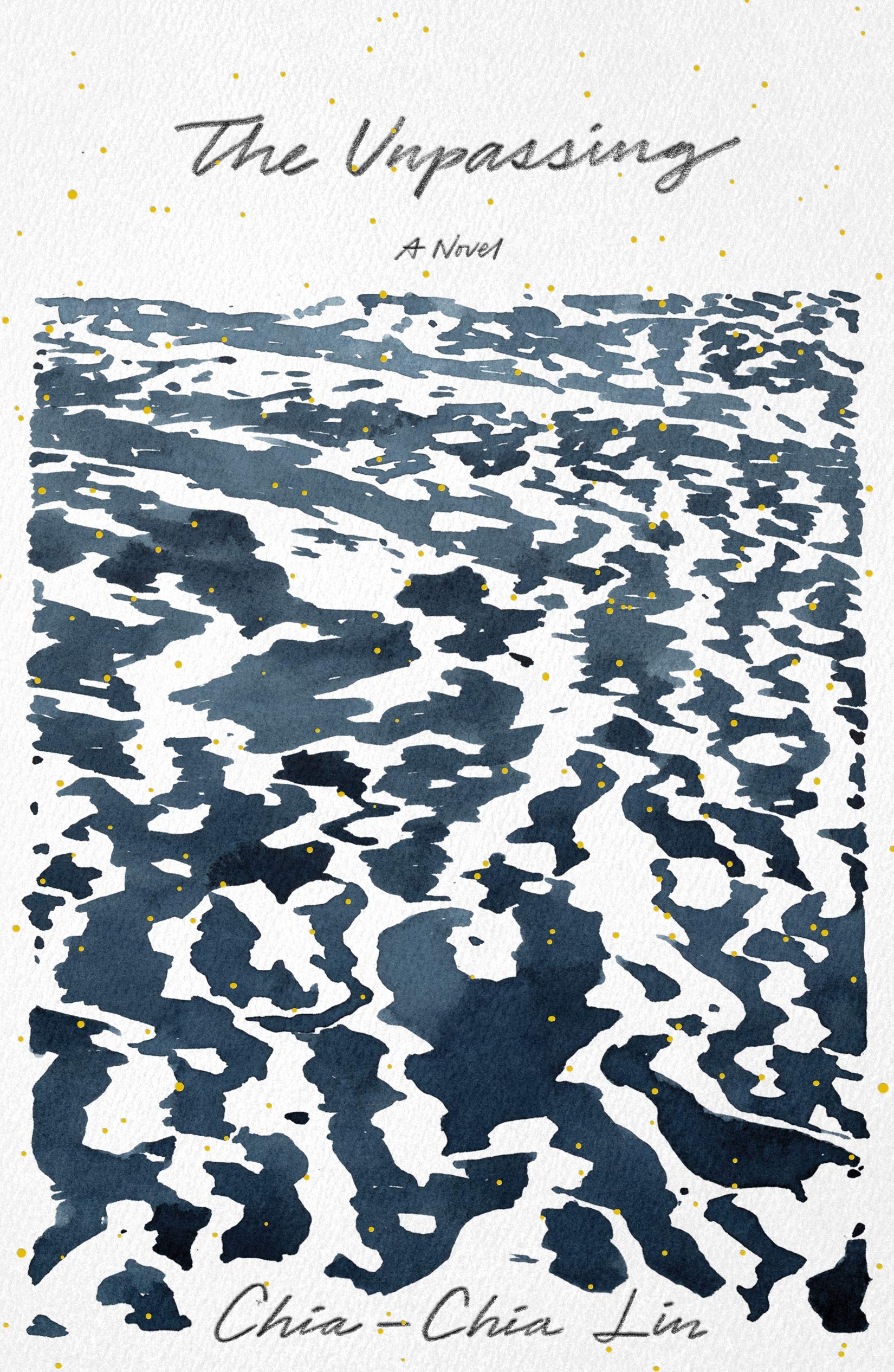
Let’s let the Macmillan site start us off with a description:
“In Chia-Chia Lin’s debut novel, The Unpassing, we meet a Taiwanese immigrant family of six struggling to make ends meet on the outskirts of Anchorage, Alaska. The father, hardworking but beaten down, is employed as a plumber and repairman, while the mother, a loving, strong-willed, and unpredictably emotional matriarch, holds the house together. When ten-year-old Gavin contracts meningitis at school, he falls into a deep, nearly fatal coma. He wakes up a week later to learn that his little sister Ruby was infected, too. She did not survive. Routine takes over for the grieving family: the siblings care for each other as they befriend a neighboring family and explore the woods; distance grows between the parents as they deal with their loss separately. But things spiral when the father, increasingly guilt ridden after Ruby’s death, is sued for not properly installing a septic tank, which results in grave harm to a little boy. In the ensuing chaos, what really happened to Ruby finally emerges. With flowing prose that evokes the terrifying beauty of the Alaskan wilderness, Lin explores the fallout after the loss of a child and the way in which a family is forced to grieve in a place that doesn’t yet feel like home. Emotionally raw and subtly suspenseful, The Unpassing is a deeply felt family saga that dismisses the American dream for a harsher, but ultimately more profound, reality.”
This description gives us the basic premise from the perspective of the melancholic foundations of this family. They are all trying to find ways to grieve Ruby’s unexpected passing. The reason why Lin’s novel is a little bit strange, at least to me, is the way that it is filtered through the subjectivity of a child. In this way, Gavin’s focalization tends to occlude much access to the deeper emotions he might be feeling, and we’re obviously left out of the interiorities of other characters. The novel thus tends to have a meandering feeling. Part of this ambience is precisely do to this child-like perspective. Gavin spends much time in the wilderness, alongside some school friends (Ada and Collin), his siblings Pei-Pei and Natty. What becomes evident through Lin’s skillful and understated aesthetic is that the family is highly impoverished. One of the most incredible scenes is when Gavin and Natty are invited over to dinner at Ada and Collin’s home. Gavin is very uncomfortable, immediately realizing the difference in material resources that this family has over his. It becomes ever more obvious when Mr. Dolan (Ada and Collin’s father) demands that Gavin take home some leftovers, which end up being a bag filled to the brim with groceries. Because Gavin doesn’t necessarily perceive his life as filled with scarcity, it is not until we have scenes like this one that really strike home the challenges that Gavin’s family have been facing in Alaska. This scene is also crucial for the ending arc when Natty goes missing, and the family meets its breaking point. Lin has created such a naturalistic novel—something more in the vein of Jack London than anything else that I can think off—that I didn’t even believe the ending, which relies upon a literal stroke of luck that I will not reveal. Though I felt a sense of relief that there could be some potentiality and promise amid so much deprivation and heartache, the trick of one minor plot point, already telegraphed earlier on the novel over a minor conversation in a car ride, comes off as a bit rushed, perhaps even disingenuous. Nevertheless, Lin’s prose is absolutely stellar, sparks off the page with a regionalist, youth-filtered verve, and makes Lin one to watch out for.
For more on the book go here:
https://us.macmillan.com/books/9780374719456
Review Author: Stephen Hong Sohn
Review Editor: Xiomara Forbez
Prof. Stephen Hong Sohn at sohnucr@gmail.com
Xiomara Forbez, PhD Candidate in Critical Dance Studies, at xforb001@ucr.edu


