Aug. 28th, 2020

jacobballew: (Default)
[personal profile] jacobballew
Amazon.com: Ship of Fates eBook: Chung, Caitlin: Kindle Store


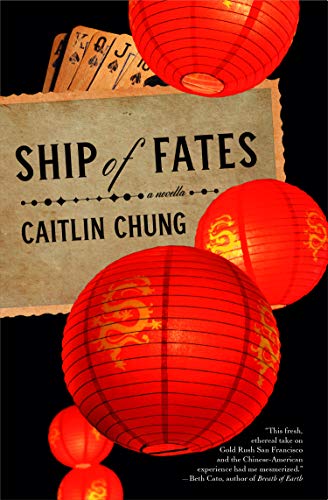
Wow, it’s been a long time since I reviewed something from the very cool indie press Lanternfish. Way back in the day, I read this funky, lovely little book by Vikram Paralkar called The Afflictions. Paralkar recently came out with a novel, Night Theater, which I have read! In any case, so I recently saw that they’d come out with another text of interest Caitlin Chung’s Ship of Fates (Lanternfish Press, 2020), and I am here to review it. First off, let’s give you some background from the official site: “In the gridlocked harbor of San Francisco's Barbary Coast, a ship hung with red paper lanterns draws crowds eager to gamble and drink. Aboard this red-lit ship, the fates of two young women will be altered irrevocably—and tied forever to that of an ancient lighthouse keeper who longs to be free. Set against the backdrop of Gold Rush–era San Francisco's Chinese immigrant community, Ship of Fates is a coming-of-age fairy tale that stretches across generations.” The first thing you’ll note right off the bat is that Ship of Fates has an intriguing structure. There are alternating narratives. There is a frame narrative involving a lighthouse keeper and her visitor and then there is an embedded narrative in which we get a sense of the lighthouse keeper’s life in a past period. The novel toys with a myth related to the “gold mountain,” famed in Chinese transnational circles as a nickname first for the West Coast of the United States and later for parts of Canada. In this particular novel, we find out that the lighthouse keeper is trying to fulfill the terms of a debt that she seems she can never repay. The story of how the lighthouse keeper continually comes to ruin is something that Chung patiently and beautifully lays out in exquisite prose and in her very talented, atmospheric production of setting. There is always something a little bit magical bubbling under the surface of Chung’s work, which certainly imbues the compelling Chinese/ American female characters with verve. Scenes that take place in San Francisco’s Barbary Coast ripple with tension and intrigue; you always feel as though the bottom of the plot is going to drop out from under you. An outstanding debut set primarily in the Gold Rush era. Let’s hope Chung has something in store for us soon.


Buy the Book Here:


https://lanternfishpress.com/shop/ship-of-fates


jacobballew: (Default)
[personal profile] jacobballew
The Archer at Dawn by Swati Teerdhala


A Review of Swati Teerdhala’s The Archer at Dawn (Katherine Tegen Books, 2020)


Imprint: Katherine Tegen Books

On Sale: 05/26/2020

List Price: 18.99 USD


One thing I shouldn’t have done before reading Swati Teerdhala’s The Archer at Dawn (Katherine Tegen Books, 2020) was to look up the description of the book up on the internet first. The book is currently being advertised on some sites as part of a two-book series, so I was ready for this one to finish out the issues it set forth in the first in the series (The Tiger at Midnight). In any case, let’s let the official marketing burb give us some crucial information: “A stolen throne. A lost princess. A rescue mission to take back what’s theirs. For Kunal and Esha, finally working together as rebels, the upcoming Sun Mela provides the perfect guise for infiltrating King Vardaan’s vicious court. Kunal returns to his role as dedicated soldier, while Esha uses her new role as adviser to Prince Harun to seek allies for their rebel cause. A radical plan is underfoot to rescue Jansa’s long-lost Princess Reha—the key to the throne. But amidst the Mela games and glittering festivities, much more dangerous forces lie in wait. With the rebel’s entry into Vardaan’s court, a match has been lit, and long-held secrets will force Kunal and Esha to reconsider their loyalties—to their countries and to each other. Getting into the palace was the easy task; coming out together will be a battle for their lives. In book two of Swati Teerdhala’s epic fantasy trilogy, a kingdom will fall, a new ruler will rise, and all will burn.” I should have read this particular description because I would have been prepared for the fact that it was a trilogy. About two thirds of the way through the narrative, I got anxious. I was thinking to myself: there are too many open threads and the plot is moving too slow to resolve them. I was right because, well, there’s a third book! The biggest reveal is probably related to the whereabouts of Princess Reha. Part of the conundrum that Teerdhala has put herself in is how to extend the issue of the romance plot alongside the political intrigue that is occurring in her complicated world of shapeshifters, magic, and bonds with the gods. After the first in the series, it was quite clear that Kunal and Asha were an “endgame” type couple, so this installment had to throw something into the equation that would destabilize that. Teerdhala figures out how to deal with this issue while also making the political gamesmanship that was tracking throughout the second in the series end on an even more precarious note. For these reasons, the second in the series is supremely readable, especially over the last hundred pages. If I have a minor critique with this text, it is the one that plagues so many second installments in a trilogy, there is just quite a lot of set up. Indeed, I found myself very impatiently moving through the first half of the book, wondering where we were being led to. Nevertheless, Teerdhala has made quite the complicated and lush fictional world, one filled with enough tantalizing loose ends to make the third something that readers will be impatiently waiting for. As a scholar of Asian American literature, what I find particularly striking about this series is Teerdhala’s desire to make her fictional world unequivocally ethnic, with the schism between Dharka and Jansa bringing especially rich tension to the plotting. This kind of allegorizing of ethnic and social difference creates a politically dynamic speculative terrain that makes The Archer at Dawn rise above others in the genre.


Buy the Book Here:


https://www.harpercollins.com/9780062869241/the-archer-at-dawn/


jacobballew: (Default)
[personal profile] jacobballew


Members Only by Sameer Pandya


2020 must be the year of the Asian American sports novels. Following the brilliances found in both Quan Barry’s We Ride Upon Sticks (field hockey) and Gish Jen’s The Resisters (baseball), Sameer Pandya’s Members Only (Houghton Mifflin, 2020) brings us into the racially fraught world of both tennis and academics. Pandya is of course the author of the outstanding collection The Blind Writer, which I earlier reviewed on AALF. Let’s let the official Houghton page give us some more key information about Pandya’s polemic novel: “First the white members of Raj Bhatt’s posh tennis club call him racist. Then his life falls apart. Along the way, he wonders: where does he, a brown man, belong in America? Raj Bhatt is often unsure of where he belongs. Having moved to America from Bombay as a child, he knew few Indian kids. Now middle-aged, he lives mostly happily in California, with a job at a university. Still, his white wife seems to fit in better than he does at times, especially at their tennis club, a place he’s cautiously come to love. But it’s there that, in one week, his life unravels. It begins at a meeting for potential new members: Raj thrills to find an African American couple on the list; he dreams of a more diverse club. But in an effort to connect, he makes a racist joke. The committee turns on him, no matter the years of prejudice he’s put up with. And worse still, he soon finds his job is in jeopardy after a group of students report him as a reverse racist, thanks to his alleged ‘anti-Western bias.’ Heartfelt, humorous, and hard-hitting, Members Only explores what membership and belonging mean, as Raj navigates the complicated space between black and white America.” Pandya’s novel starts out with a racial controversy, one that is perhaps ever more acute given the state of America at this very moment. Raj sits in a very uneasy position at his local tennis club, one of the very few minorities, so when his racially insensitive joke falls on deaf ears, he is forced to reconsider his place not only in the club but also his positionality vis-à-vis other racial groups. What resonates with me the most is the complicated way in which racial discourses are used to police those who are advocating for racial justice in the first place. This conundrum is best apparent in the fact that Raj is considered not being politically correct in relation to his tennis club, even as the club itself has been mired in structural racisms in the way that it selectively admits new members. The other element that was absolutely fascinating was the way in which the liberal faculty member finds himself in a problematic position with respect to politically oriented lectures that are then weaponized against him. Pandya’s representation reminds us of the way in which the university is also a corporate site with students that function as consumers. The question that this particular plot development brings up is the possibilities of academic freedom in light of student expectations about what a good education might or might not be. The strongest characteristic of the novel is no doubt Pandya’s incisive character depiction. Written in the first person, Raj reads as a no-nonsense figure, one who becomes enmeshed in circumstances that are almost outside of his control. I use the word “almost” because there’s always a sense that Raj is going to do whatever he can to advocate for his strong sense of justice, giving this novel a firm and compelling foundation. Oh, and the novel is of course, well suited to fans of tennis, though I must admit, I wish there was a little bit more of those elements in there =).


Buy the Book Here:


https://www.hmhbooks.com/shop/books/Members-Only/9780358098546


jacobballew: (Default)
[personal profile] jacobballew
Days of Distraction: A Novel: Chang, Alexandra: 9780062951809: Amazon.com:  Books


In this review, I cover Alexandra Chang’s debut
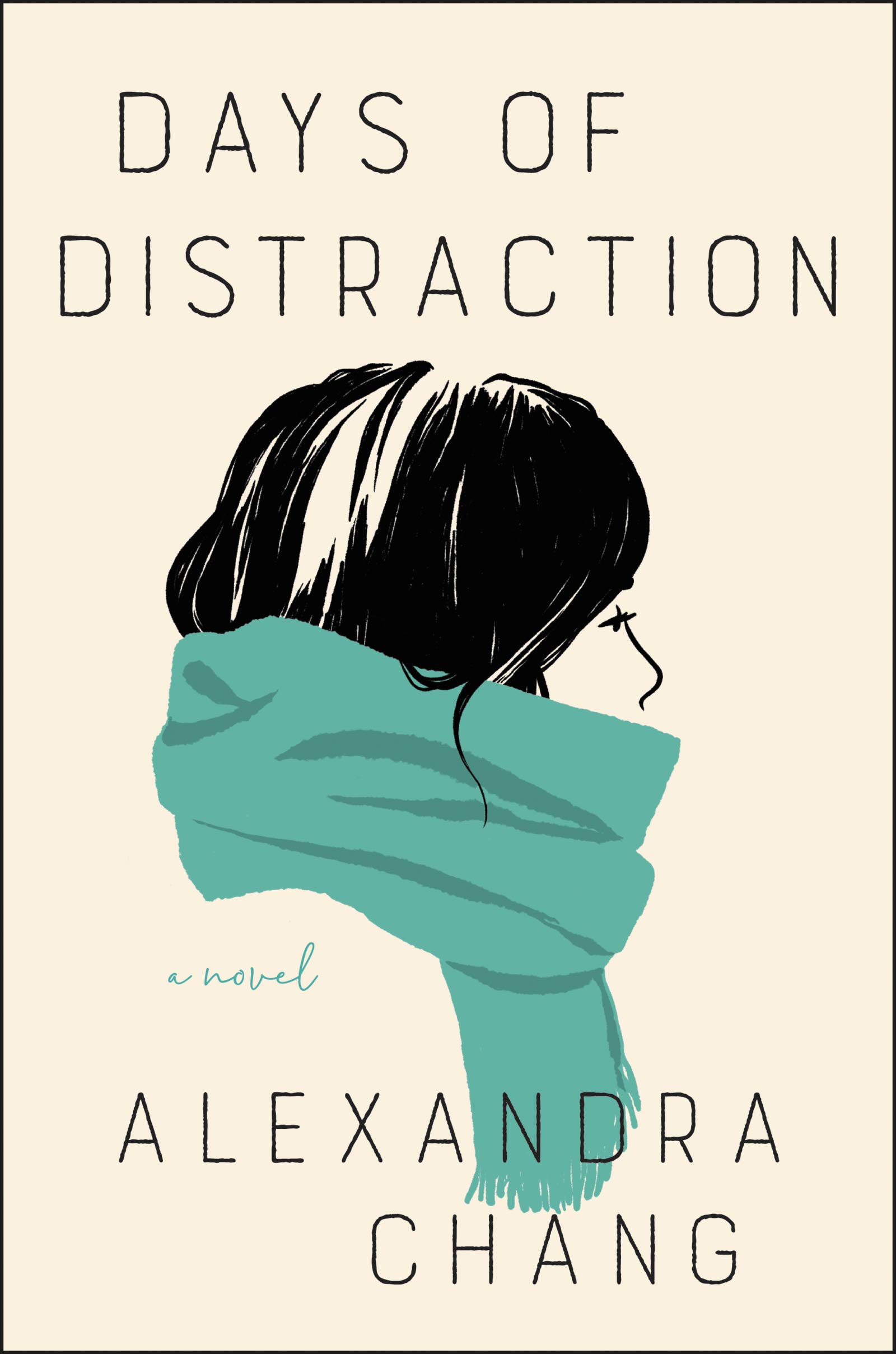
Days of Distraction (Ecco, 2020). Let’s let the official description do some work for us: “A wry, tender portrait of a young woman—finally free to decide her own path, but unsure if she knows herself well enough to choose wisely—from a captivating new literary voice. The plan is to leave. As for how, when, to where, and even why—she doesn’t know yet. So begins a journey for the twenty-four-year-old narrator of Days of Distraction. As a staff writer at a prestigious tech publication, she reports on the achievements of smug Silicon Valley billionaires and start-up bros while her own request for a raise gets bumped from manager to manager. And when her longtime boyfriend, J, decides to move to a quiet upstate New York town for grad school, she sees an excuse to cut and run. Moving is supposed to be a grand gesture of her commitment to J and a way to reshape her sense of self. But in the process, she finds herself facing misgivings about her role in an interracial relationship. Captivated by the stories of her ancestors and other Asian Americans in history, she must confront a question at the core of her identity: What does it mean to exist in a society that does not notice or understand you? Equal parts tender and humorous, and told in spare but powerful prose, Days of Distraction is an offbeat coming-of-adulthood tale, a touching family story, and a razor-sharp appraisal of our times.” The thing to note right away from this description is that the narrator is not given a name, so I’m going to provide you with a spoiler warning right away: look away if you don’t want to know. Our narrator is none other than a character named Alexandra (which isn’t revealed until third quarters of the way into the novel). If you do some cursory research, you also find out that the author, Alexandra Chang once worked as a journalist in the tech industry in the Bay Area. So, we’re obviously working within the frame of the autobiographical novel. I always find these types of texts interesting because you can’t help but wonder what has been fictionalized and what has not. In any case, the novel is structured basically in vignettes. The first quarter or so focuses on Alexandra’s life in the Bay Area and the complicated and often unfulfilling work that she is engaging in. Her boyfriend’s graduate school admission proves to give her a reboot, but things start to change when they move to Ithaca, New York. What Chang’s novel does best is to provide readers how an individual comes into race consciousness. For someone like our narrator, who is used to parsing out lots of information and digesting it, her interests lead her to explore Asian American history, especially with respect to interracial relationships and early figurations of Asian American women. These forays lead her to wonder about her own relationship with J, which eventually leads to a rupture point. Alexandra is then led to visit her father (who has long been separated from Alexandra’s mother), who lives in China. The time she has with her father seems to give her the perspective to return to her relationship with a new sense of purpose and possibility. Yet, I was skeptical. I found this narrator quite introspective in a way that J did not seem to be. The rapprochement that the narrative offers up between J and Alexandra seems to be one that may not be lasting, or at least I thought so. Nevertheless, Chang gives us some sublime prose and an absolutely crystal-clear view into the process by which one comes to terms with their own sense of racial and gendered social difference. A writer to watch.


Buy the Book Here:


https://www.harpercollins.com/9780062951809/days-of-distraction/


Profile

asianamlitfans: (Default)
A Veritable Literary Feast

September 2025

S M T W T F S
 123456
78910111213
14151617181920
21222324 252627
282930    

Style Credit

Expand Cut Tags

No cut tags
Page generated Mar. 12th, 2026 07:29 pm
Powered by Dreamwidth Studios